Brooke's theory of change
Our Theory of Change is how we believe change happens in the world.
In order to sustainably improve the welfare of working horses, donkeys and mules we recognise the complex interaction between the animal, communities and the system within which they co-exist. We believe that change to human behaviour needs to happen at all levels in order achieve transformational change for working animals and the communities that rely on them for their livelihoods.
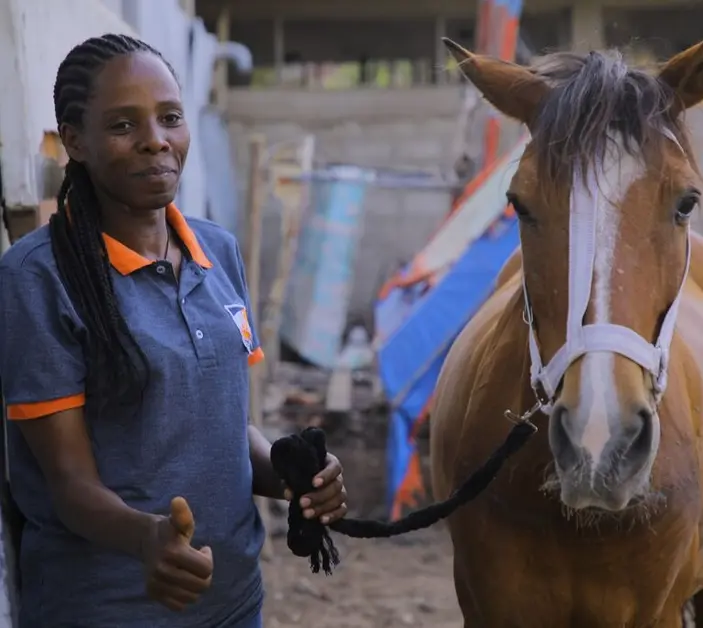
Watch Brooke's Theory of Change
The following animation gives a brief introduction to Brooke’s Theory of change. It also shows how this way of working has helped us achieve real positive change for working horses, donkeys and mules.
"Farming is made possible by donkeys. All household animals rely on donkeys which are the ones carrying and bringing feed and water for cows, chickens, sheep and goats."
People, animals and planet
Working together to make change happen
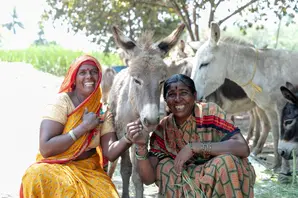
Working horses, donkeys and mules (known as equines) are an essential part of sustainable development and measurably contribute to many of the Sustainable Development Goals. Recognised by the UN as ‘working livestock’, they support the daily lives and livelihoods of over 600 million people living in some of the world’s poor and most vulnerable regions.
A largely unsupported 'livestock' group, they contribute much to:
- household livelihoods
- agricultural systems (farming)
- female empowerment
- local economies.
Working animals are often a critical asset for communities to recover from disasters and emergencies. Within this context, Brooke’s expertise improves working animal welfare, enabling communities to thrive.
The relationship between animal welfare, human well-being and the environment in achieving sustainable positive change is known as the One Welfare concept.
"Our living is primarily dependent on equines [horses, donkeys and mules] and if we don’t take care of their needs our family cannot survive."
Explainer
Our theory of change infographic
Our theory of change focuses on three main areas of 'impact': improved equine welfare; thriving equine communities; strengthened animal welfare systems.

Download our theory of change infographic
Who we are