Brick kilns: a hidden industry
We’re taking action to protect working animals, people and the planet from the damaging effects of brick kilns.
Exploitative industries
What are brick kilns?
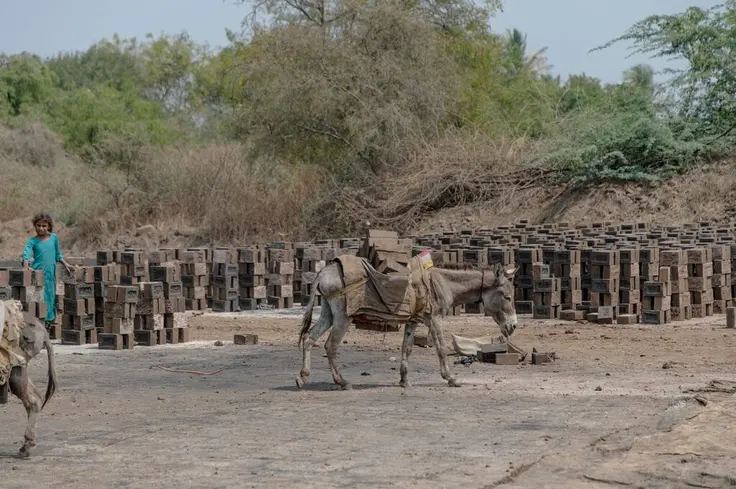
Donkeys, horses and mules work in brick kilns – which are brick making factories - in countries such as India, Nepal, Afghanistan and Pakistan.
It's a hidden industry that’s often unorganised and unregulated. And one where animals and humans endure harsh working conditions.
Learn more about Brooke’s work in brick kilns and how we’re helping working animals.
How we'll help 75,000 more animals
We identified 3,000 new brick kilns in Pakistan where our work will have the biggest impact on the welfare of working donkeys, horses and mules. Watch to see how we’ll help 75,000 donkeys, horses and mules in Pakistan’s brick kilns by 2026.
Selecting new brick kilns to focus our work in was a careful process. It also shows us the potential long-term impact of our work. People we train then move to nearby brick kilns, passing on what they've learnt to other communities. This helps to improve horse and donkey welfare in the area overall.
What's it like in a brick kiln?
In brick kilns, the animals transport handmade bricks. Every day they carry tonnes of bricks for use in the construction industry.
These animals suffer from:
- poor nutrition
- serious health and welfare issues
- extreme working environments
- poor husbandry and management
- acute heat stress
- lack of shade, water and rest
- being overloaded, leading to disease and injuries.
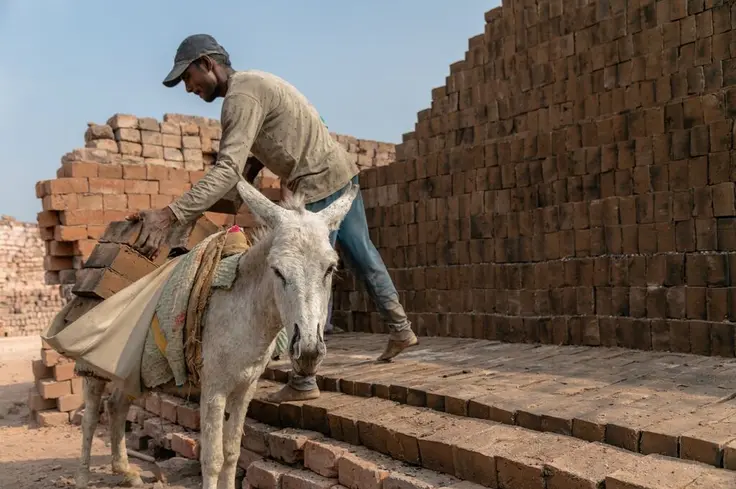
What is an 'exploitative industry'?
Healthcare is scarce and labour abuses, including low wages, child labour and bonded labour, are common. Brick kilns pollute the air and water, causing infection and diseases in animals and humans.
There are around 152,700 active kilns in South Asia . These kilns produce 21% of the world’s bricks, employing over 16 million people and 500,000 animals . Kilns are one of the most challenging work environments for people and animals, which is why it is referred to as an ‘exploitative industry’, alongside coal mines.
Take a virtual tour of a brick kiln
Take a 360° tour with brick kiln workers Waqas and Tayyba, and their horse Raju.
To explore the 360° video, just use your cursor to shift the camera’s view left, right, up and down. For the best results, click the YouTube settings icon (it looks like a gear wheel) and select the highest HD setting.
How we're helping
Brick kilns take a heavy toll on their animal and human workforce as well as damaging the environment. To address these challenges, Brooke has adopted a ‘One Health’ approach.
One Health is an idea that recognises the links between human, animal and environmental health, and how they impact each other, both positively and negatively. This is how we’re helping...
Learn more about animal health and welfare
Explore more about how - with your help - we're supporting working horses, donkeys and mules across the world.